

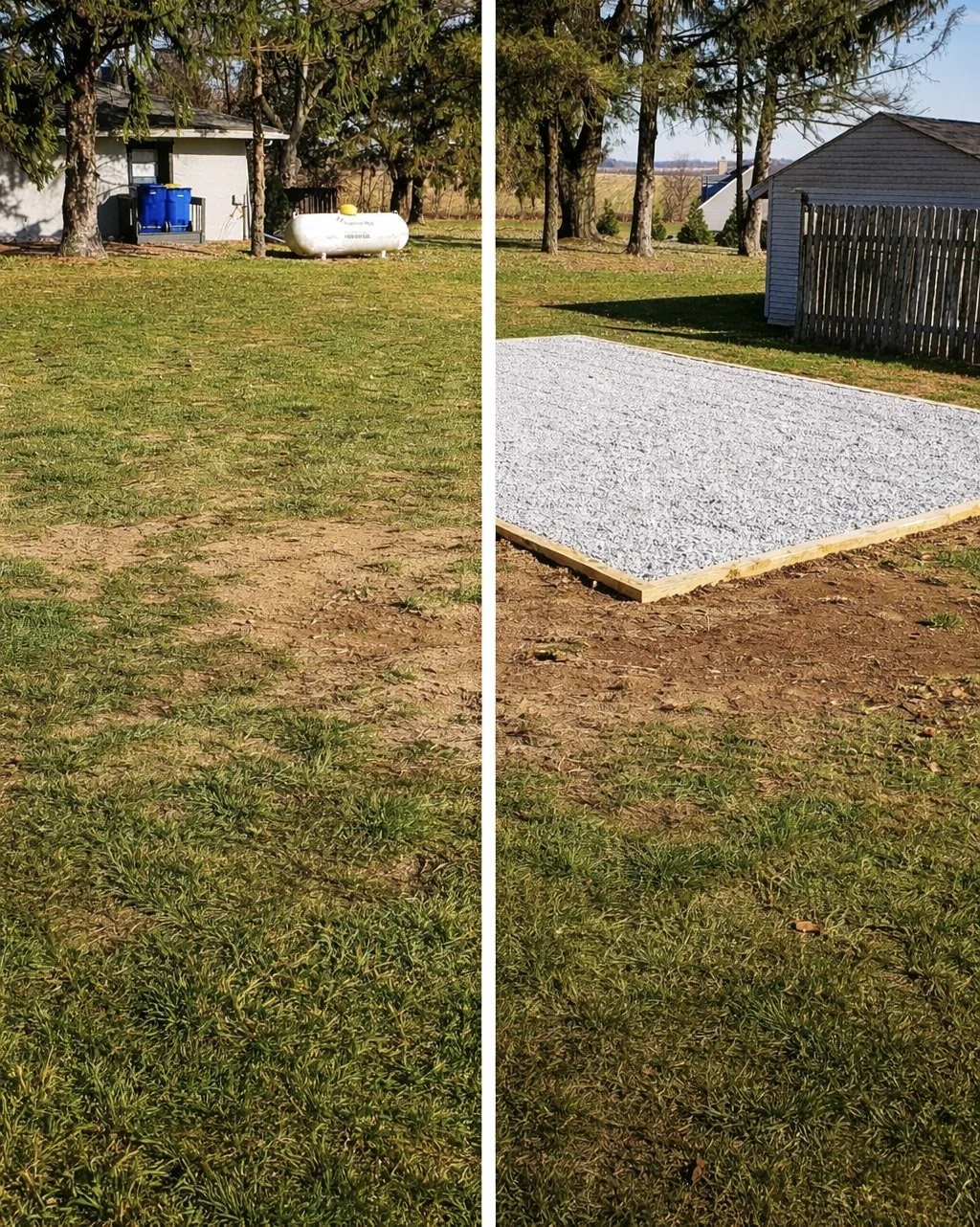
Foundations & Gravel Pads
Most shed problems don’t start with the shed. They start with what the shed is sitting on.
In Western Washington, water + soft soils + uneven ground can cause settling, door alignment issues, rot risk, and long-term instability. This page explains how foundations work, what fails, and what “done right” looks like.
(Back to The ShedPros Knowledge Center)
Q&A
What is the best foundation for a shed in Western Washington?
For most properties, a properly built compacted gravel base is the best all-around option. It supports weight evenly, drains naturally, and reduces moisture-related damage.
Why is setting a shed on dirt or grass a bad idea?
Dirt and grass trap moisture, shift seasonally, and compress unevenly. Over time that can lead to settling, soft spots, floor sag, and doors that stop closing correctly.
Are concrete blocks enough?
Blocks can work in limited cases, but they often create pressure points and are more sensitive to settling and soil movement. A full base is more stable long-term.
Why does gravel help a shed last longer?
Gravel reduces standing water and helps keep the underside drier. Less moisture under the shed usually means less rot risk and fewer “soft floor” problems over time.
How do you keep a gravel pad from sinking?
Two things matter most:
Proper excavation and base preparation for the soil type
Correct compaction in layers—not “dump and hope”
How level does a base need to be?
Level matters more than most people realize. Even small tilt can lead to door issues, window binding, roof stress, and gradual racking over time.
Should the gravel pad extend beyond the shed footprint?
Yes. A pad that extends beyond the shed helps with edge stability and reduces splashback and erosion around the perimeter.
Will a gravel pad prevent water from pooling under the shed?
A properly designed pad helps—especially when paired with grading and drainage planning. Gravel alone is not magic if water is being directed toward the shed.
Can you build a foundation on a slope?
Often yes. The approach depends on access, slope severity, and water flow. We design the solution around stability and drainage.
Quick Summary
A foundation isn’t an “add-on.” It’s the system that protects the shed from settling and moisture issues.
If you want, we can evaluate your site and recommend the most reliable foundation approach for your soil, slope, and access path.
(Back to The ShedPros Knowledge Center)
Related Reading
Foundation performance depends heavily on Shed Drainage and how water moves around your site, as well as Shed Placement and access routes that affect base design. For how foundations impact longevity, see Shed Warranty & Long-Term Care.

“Communication was top-notch and the final outcome was even better than we imagined. A great experience all around.”
A proud member of our ShedFam